

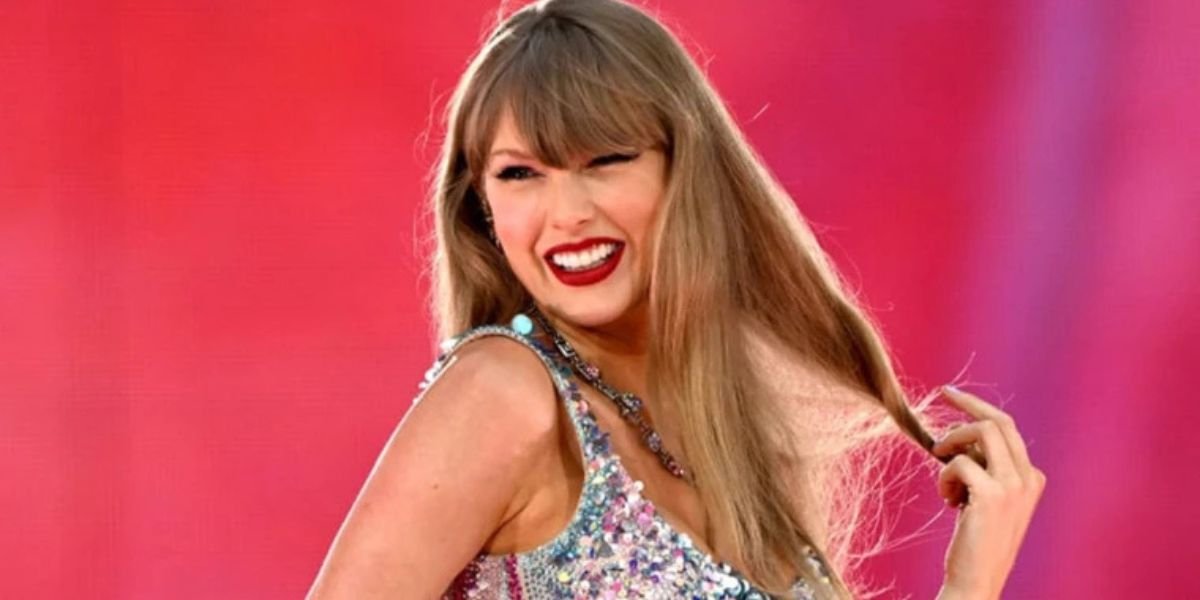
Taylor Swift’s hairstyles have never been just about hair. They’ve been clues, confessions, and sometimes quiet revolutions. Long before fans decoded liner notes or Easter eggs, they were reading her reinventions strand by strand from country curls that screamed teenage fairytale to sharp bobs that announced pop domination, and now, Eras Tour glam that feels like a victory lap through every version of herself.
In a culture obsessed with reinvention, Taylor Swift didn’t just change her sound, she changed her silhouette. And somehow, every haircut felt like a headline.
So let’s rewind, era by era, curl by curl, and unpack how Taylor Swift’s hairstyles became one of the most underrated storytelling tools in modern pop history.
Quick Bio: Taylor Swift at a Glance
| Fact | Details |
|---|---|
| Full Name | Taylor Alison Swift |
| Age (2025) | 35 |
| Born | December 13, 1989 |
| Occupation | Singer, Songwriter, Producer |
| Notable For | Record-breaking albums, Eras Tour, cultural reinvention |
| @taylorswift | |
| Genres | Country, Pop, Indie Folk |
Why Taylor Swift Hairstyles Matter More Than Just Fashion
Plenty of celebrities change their hair. Very few turn it into a cultural timestamp.
Taylor Swift hairstyles have always aligned almost too perfectly with her artistic chapters. The curls softened her country ingénue years. The bangs framed her entry into pop royalty. The blunt bob? That was power, control, and a public breakup with expectations.
Beauty editors often point out that hair is the most immediate form of reinvention less permanent than a tattoo, more symbolic than a new wardrobe. For Taylor, it became visual shorthand. Fans didn’t need a press release to know something had shifted. One glance at her hair on a red carpet did the talking.
As People once noted during her 1989 era, “Taylor Swift’s transformation wasn’t loud, it was precise.” And nowhere was that precision clearer than in her hair.
The Country Era Curls (2006–2009)
Before stadium tours and billionaire headlines, there were the curls.
When Taylor Swift debuted in the mid-2000s, her tight, golden ringlets became as recognizable as her acoustic guitar. They weren’t styled to look trendy they looked natural, almost untouched. And that was the point.
At a time when pop stars leaned glossy and overproduced, Taylor’s curls sold authenticity. She looked like the girl next door who just happened to write heartbreak anthems. Songs like Tim McGraw and Teardrops on My Guitar paired perfectly with those soft spirals, reinforcing her image as country music’s earnest new storyteller.
Fans often forget: she didn’t straighten her hair back then because she didn’t need to. The curls told the story, young, hopeful, unguarded.
Fearless to Speak Now: Romantic Waves and Soft Glam
As Taylor’s fame grew, so did her polish subtly.
During the Fearless and Speak Now eras, the curls loosened. The volume softened. Side-swept bangs made their first major appearance, giving her look a romantic, fairytale quality that matched ballads like Love Story and Enchanted.
Red carpet appearances started to feel more deliberate, but never forced. Think flowing gowns, golden highlights, and hair that looked like it belonged in a storybook because Taylor was still selling romance, vulnerability, and dreaminess.
It was evolution without rebellion. Growth without shock.
Beauty writers at Billboard later described this period as “Taylor Swift learning how to be famous without losing her softness.” Her hair reflected exactly that.
The Red Era Transformation: Bangs, Boldness, and Control
Then came the fringe, and everything changed.
When Taylor Swift debuted her straight-across bangs during the Red era, it felt intentional in a way fans hadn’t seen before. The look was sharper. Cleaner. Less “girl with guitar,” more woman owning the narrative.
This was the era of emotional whiplash, heartbreak, freedom, confusion, and her hair mirrored the complexity. Loose waves replaced curls. Straight styles appeared more frequently. The bangs stayed.
It wasn’t just a hairstyle; it was a boundary. Taylor had learned that visibility required control, and her look finally reflected that realization.
According to FamousBirthdays, searches for “Taylor Swift bangs” spiked dramatically during this period proof that fans were paying attention, even if they didn’t yet realize why.
The 1989 Bob That Changed Everything
Every pop star has a moment. For Taylor Swift, the bob was it.
When she chopped her hair into a sleek, shoulder-skimming cut for 1989, the message was unmistakable: reinvention complete. Gone were the curls. Gone was country. This was pop, capital P.
The bob became synonymous with New York cool, modern, sharp, and confident. Paired with crop tops and bold lipstick, Taylor looked less like a songwriter next door and more like a chart-dominating architect of her own image.
As Variety put it, “The haircut said what the album title implied this was a reset.”
And fans followed. Salons across the US and UK reported a surge in bob requests “like Taylor Swift.” Hair had officially become cultural currency.
Reputation Era: Darker Hair, Darker Energy
If 1989 was clean reinvention, Reputation was controlled chaos.
Taylor leaned into darker tones, sleeker styles, high ponytails, and wet-look waves. The softness was gone. The smiles were selective. The message? She was done playing nice.
This era’s hairstyles didn’t aim to charm they aimed to dominate. Sharp center parts. High shine. Zero apologies.
Beauty editors at People described her reputation as “armor.” And honestly, that tracks. The hair didn’t invite you in it warned you.
Lover, Folklore & Evermore: Softness Returns (On Her Terms)
Then, unexpectedly, Taylor softened again.
The Lover era reintroduced lighter tones and romantic styling, but this time it felt intentional, not naive. The bangs stayed. The waves returned. But the control never left.
By the time Folklore and Evermore arrived, Taylor embraced natural textures, minimal styling, and a cottagecore aesthetic that felt almost anti-celebrity. Hair looked lived-in, effortless, real.
It wasn’t about trends anymore, it was about comfort.
As IMDb interviews from this period suggested, Taylor was no longer styling herself for approval. She was styling herself for peace.
The Eras Tour Hairstyles: Nostalgia Meets Victory
If there’s a single reason Taylor Swift hairstyles dominate search trends today, it’s the Eras Tour.
On stage, Taylor cycles through versions of herself, curls, bangs, waves, straight styles, sometimes all in one night. It’s nostalgia as spectacle, and fans can’t get enough.
Each hairstyle feels intentional, tied to a specific album, memory, or emotional chapter. Social media explodes nightly with close-ups, comparisons, and recreations.
According to Billboard, the Eras Tour isn’t just a concert, it’s a cultural archive. And Taylor’s hair is one of its most powerful visual anchors.
How Fans Recreate Taylor Swift Hairstyles Today
Part of the magic? Her looks are aspirational but achievable.
Unlike hyper-styled celebrity hair, Taylor’s most iconic styles, bangs with waves, soft curls, mid-length bobs, feel wearable. Fans copy them for weddings, nights out, and even everyday work looks.
Beauty TikTok is flooded with tutorials inspired by her Eras Tour hair, proving once again that Taylor’s influence extends far beyond music.
If you’re into celebrity beauty deep dives, you might also enjoy our feature on iconic celebrity style transformations on AmourVert.co.uk (internal link suggestion), or our breakdown of Eras Tour fashion moments (internal link suggestion).
Read More: These Golden Globes Dresses Changed Red Carpet Fashion Forever
What Taylor Swift’s Hairstyles Say About Her Legacy
Taylor Swift’s hairstyles aren’t random. They’re chapters.
They mark growth, rebellion, healing, and confidence. They show a woman learning how to be seen, then deciding how she wants to be seen.
In an industry that often strips women of narrative control, Taylor used something as simple as hair to reclaim hers. And fans noticed. They always do.
As she continues to evolve in 2025 and beyond, one thing is certain: the next hairstyle won’t just be a look. It’ll be a message.
So the real question isn’t what Taylor Swift will do with her hair next it’s what story she’ll tell with it.
And if history is any indication, we’ll all be watching.