

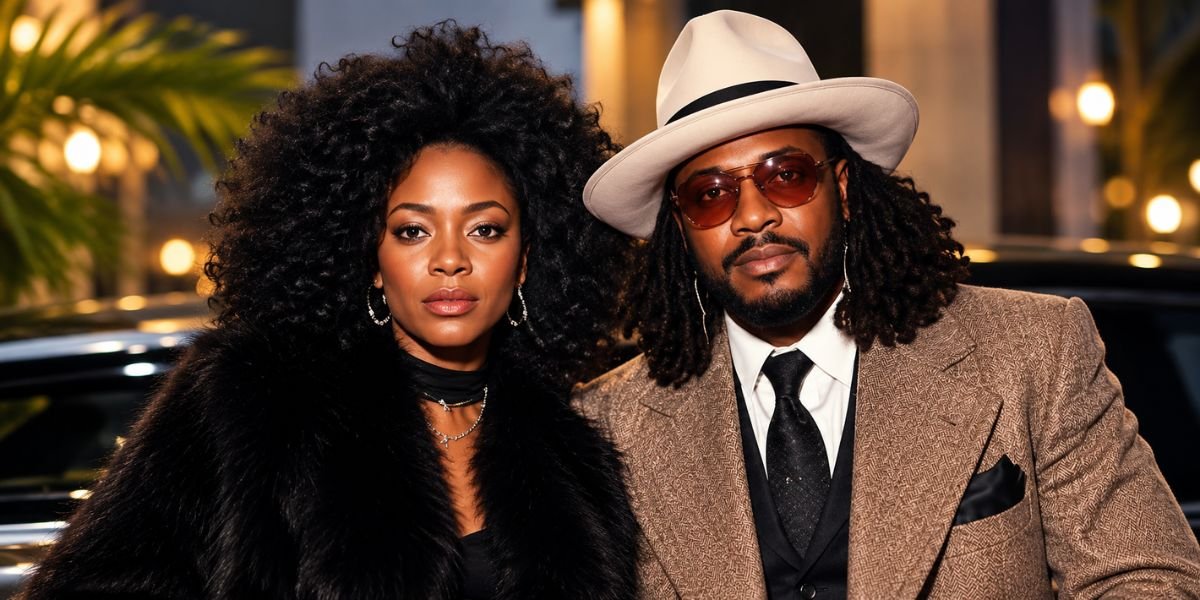
Everyone knows Frank Lucas from American Gangster — Denzel Washington’s version of the Harlem heroin kingpin who built an empire smuggling “Blue Magic” into the city. Fewer people know much about his wife, Julianna Farrait, even though she wasn’t just standing beside him for the ride. She was actively part of the operation, and her own story turned out to be just as dramatic as his.
How They Met
Farrait was born in Puerto Rico around 1941 and lived a fairly ordinary early life before she crossed paths with Frank Lucas on a flight from Puerto Rico to New York. The two hit it off immediately, married in 1967, and eventually had a daughter, Francine, together. Frank later admitted in his autobiography that her plain, understated style didn’t initially fit the image he wanted for a kingpin’s wife — so as his empire grew, he made sure she was dressed to match his rising status.
That timing mattered. Frank was right on the edge of building the heroin operation that would make him famous, at one point claiming he could pull in a million dollars a day. As the money rolled in, Julie went from a low-key country girl, as Frank described her, to someone who understood exactly how to play the part expected of her.
The Coat That Drew Police Attention
By the early 1970s, Frank was spending lavishly and constantly trying to outshine everyone around him. After showing up to a 1970 Muhammad Ali fight and seeing rival dealers in expensive mink coats, he made it clear he wasn’t going to be outdressed by anyone. Julie, likely picking up on how much that stung him, decided to solve the problem herself — she bought him a $125,000 chinchilla coat and a matching $40,000 hat for the Ali-Frazier fight at Madison Square Garden in 1971.
Frank wore it proudly. It also happened to be one of the most conspicuous outfits in the entire arena that night — he had better seats than Frank Sinatra and even the sitting vice president, all while dressed like it. Detectives in the crowd noticed. Law enforcement was already aware of him, but that night gave them a much sharper picture of just how much money he was moving, and it’s widely accepted that the coat helped put a target on his back going forward.
The Raid, and a Suitcase Full of Cash
Police and the DEA raided the Lucas home in Teaneck, New Jersey in January 1975. In the chaos, Julie reportedly threw suitcases containing more than half a million dollars out a window rather than let it be found inside. Frank ended up with a seventy-year sentence; Julie got six months. When Frank started cooperating with investigators afterward, Julie and two of the children were placed into witness protection.
Getting Pulled Back In
Frank was released early in 1982, and Julie’s role in his operations actually deepened rather than faded. About a year later, she took their daughter Francine on what looked like an innocent mother-daughter trip to Las Vegas — it was really a drug deal. An armed FBI agent walked into their hotel room and arrested Julie on the spot, while Francine, still a child, watched it happen. Both parents went back to prison, and Francine was sent to live with relatives in Puerto Rico while they served their time.
Life After American Gangster
When the movie came out in 2007, it brought fresh attention to a story Julie had always preferred to stay out of. She described herself as shy and prone to panic attacks, and said she deliberately kept a low profile even at the film’s own premiere. Despite periods of separation over the years, she maintained that her love for Frank never wavered — the two were sometimes referred to as a real-life Bonnie and Clyde because of how consistently they stuck together through everything.
That reputation held up in an unfortunate way. In 2010, years after the film’s release, Julie was arrested again — this time for attempting to sell cocaine to an informant in Puerto Rico. She was sentenced to five years in 2012, telling the court she simply wanted the chance to care for Frank, who was 81 at the time.
Frank Lucas died in 2019. Julie died before him, though relatively little has been documented publicly about the circumstances of her death — a fittingly quiet ending for a woman who spent most of her life trying to stay out of the spotlight, even while living at the center of one of the most notorious criminal stories in American history.