

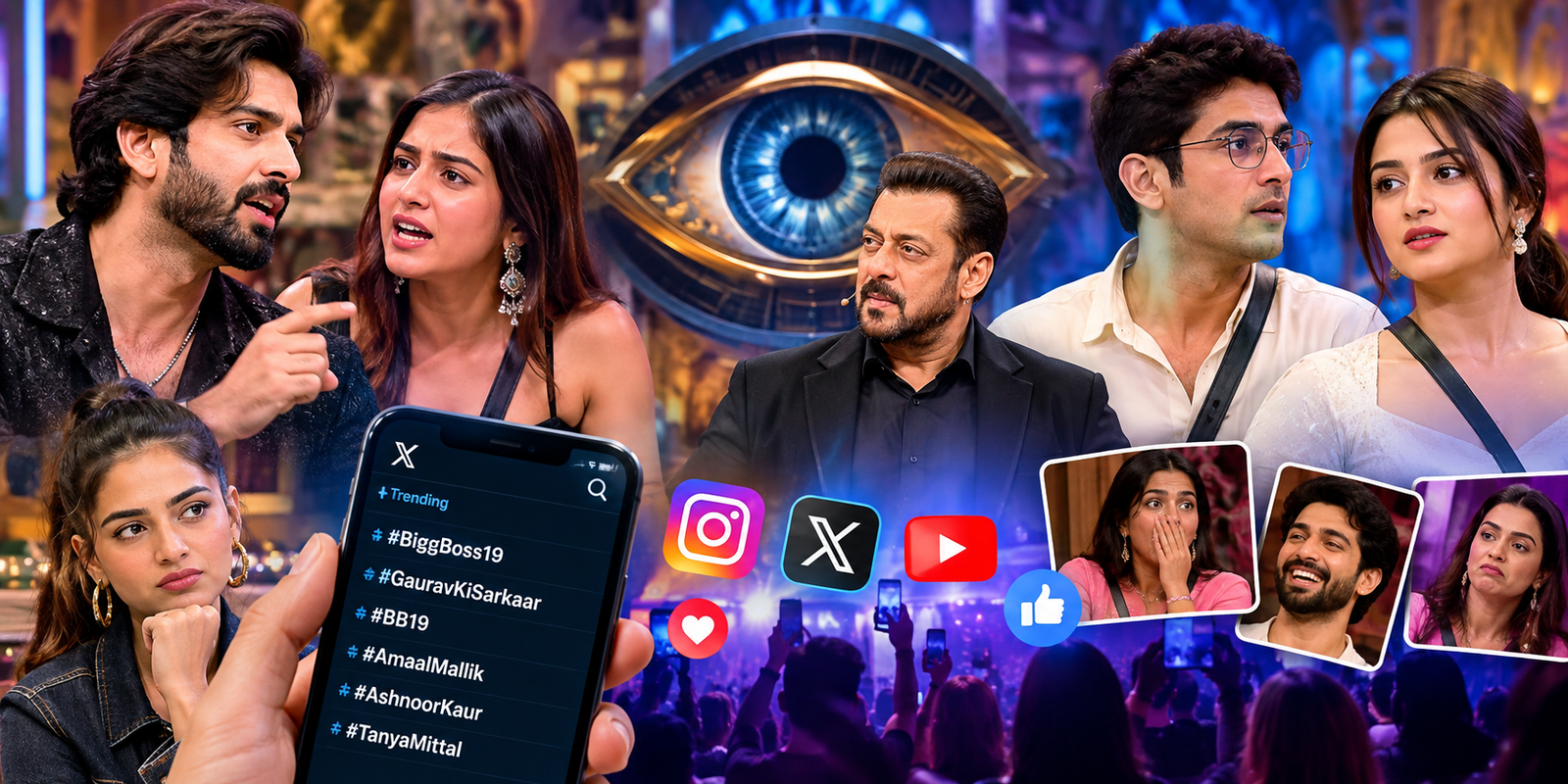
There’s a reason Bigg Boss never really stays confined to the TV screen. Every season, it spills out into arguments, friendships, betrayals, tears, and the occasional shocking twist — and Season 19 managed to do this louder than most. Somewhere between its premiere and its finale, the show stopped being just a nightly watch and turned into something people were discussing constantly online, whether they’d tuned in that night or not.
Even people who barely followed the actual episodes found themselves scrolling past clips, reaction videos, and heated comment threads about it. So what exactly pushed Bigg Boss 19 into that kind of territory? A few things stand out.
The Arguments Were Simply Too Good to Ignore
Bigg Boss has always leaned on unpredictability between contestants, and this season had no shortage of it. With a house that included personalities like Amaal Mallik, Gaurav Khanna, Ashnoor Kaur, Farrhana Bhatt, and Tanya Mittal, you had a genuinely combustible mix of temperaments, values, and approaches to conflict — exactly the kind of thing that makes for good television and even better social media fodder.
What made this season particularly sticky online wasn’t just that arguments happened, but how fast they escaped the show. A disagreement inside the house could be clipped and posted within minutes of airing, and from there it took on a life of its own — people picking sides, arguing over who overreacted, speculating about what would happen the next night. That back-and-forth online debate is often what kept a single moment relevant for days rather than fading the second the episode ended.
Fandoms Turned the Show Into Its Own Competition
Nobody watches Bigg Boss and stays neutral for long — that’s practically part of the appeal. As individual contestants built their own followings, fans started actively campaigning for them across social platforms. Hashtags, fan-made edits, tribute videos, and voting pushes became a genuine second layer to the show.
Gaurav Khanna is a good example here — his run on the show built up a noticeably devoted online fanbase, complete with recurring hashtags and organized support campaigns tracking his journey through the season. What this created, in effect, was a parallel show happening entirely online: fans weren’t just reacting to what happened in the house, they were arguing with other fan groups, defending their favorites, and treating the whole thing like a competitive sport in its own right.
Weekend Ka Vaar Kept Reigniting the Conversation
If there’s one recurring segment that reliably generates fresh discourse every single season, it’s Weekend Ka Vaar. Season 19 was no exception. Whenever Salman Khan weighed in on the week’s events — addressing arguments, nominations, or specific incidents from the house — it tended to spark a fresh wave of reactions online almost immediately.
And when viewers didn’t agree with how something got addressed (or, just as often, felt something didn’t get addressed strongly enough), social media became the outlet for that frustration. The conversation rarely just stopped when the weekend episode ended; it kept going through reaction posts, short clips, and ongoing commentary well into the following week.
Memes Pulled In People Who Never Actually Watched the Show
Here’s the thing about Bigg Boss and social media: you genuinely don’t need to watch a single full episode to end up consuming a lot of Bigg Boss content. A dramatic reaction, an oddly-timed facial expression, a memorable one-liner — any of these can get turned into a meme or a short clip within hours, and from there it circulates well beyond the show’s actual audience.
This is honestly one of the biggest reasons reality TV thrives on social media in general. A two-hour episode can be broken down into dozens of shareable, bite-sized moments, and Bigg Boss 19 leaned into that dynamic constantly throughout its run, with scenes regularly getting reworked into reels, memes, and reaction content almost as soon as they aired.
The Controversies Themselves Became the Entertainment
Reality television is basically engineered to produce disagreement — you’re watching a group of very different people forced into close quarters under artificial pressure, and naturally, not everyone reacts to that the same way. Season 19 had its fair share of contested moments, whether that was around specific contestant behavior, nomination decisions, or how eliminations played out.
And crucially, viewers didn’t agree on most of it. Some defended contestants who others were quick to criticize, and that gap in opinion is exactly what kept conversations churning across platforms like X, Instagram, and YouTube for days at a stretch. In a strange way, the disagreement among viewers became just as much a part of the entertainment as the show itself.
Why It All Added Up to Something Bigger Than TV
The real shift here isn’t really about Bigg Boss specifically — it’s about how television consumption has changed altogether. A single episode doesn’t just exist as a broadcast anymore; it lives on afterward through clips, memes, fan edits, hashtags, and endless reaction content. One throwaway scene can somehow turn into a trending topic, while another moment quietly racks up hundreds of comments and reposts without anyone quite expecting it.
Bigg Boss 19 was a pretty clear demonstration of how tightly television and social media now feed into each other. The show supplied the raw material, and the audience did the rest — distributing it, remixing it, arguing about it, and keeping it alive far longer than the broadcast schedule ever could on its own.
Final Thoughts
At the end of the day, Bigg Boss 19 blew up online because it had exactly what social media runs on: strong personalities, real disagreements, a handful of genuinely emotional moments, passionate fan communities, and no shortage of clip-worthy scenes.
Whether someone was deeply invested in a particular contestant’s journey or just casually following the chaos from a distance, the season gave everyone plenty to talk about. And maybe that’s the real takeaway — the modern Bigg Boss experience doesn’t end when the credits roll. It just moves online, where the audience takes over and keeps the conversation running long after the show itself has gone quiet for the night.